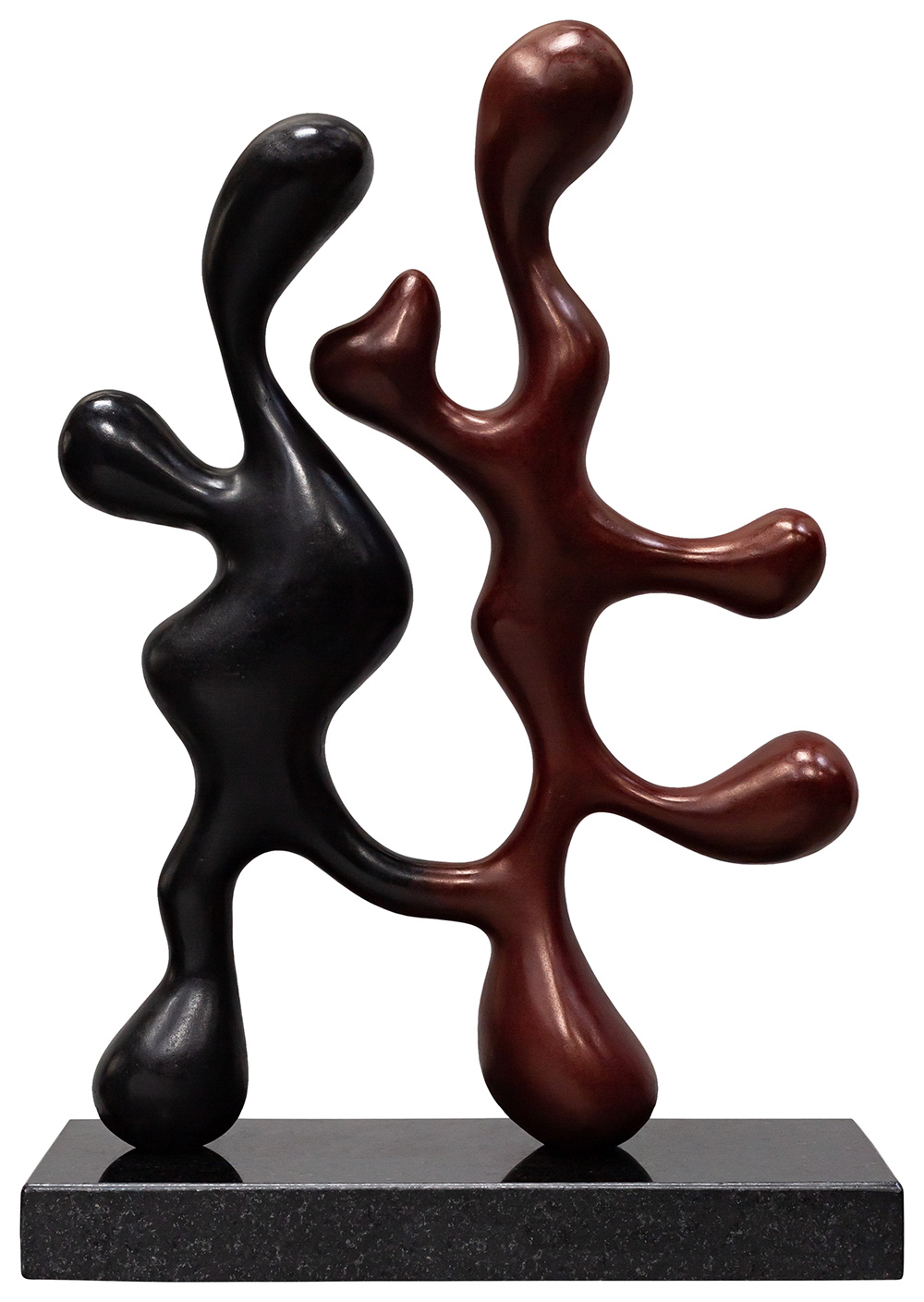
Natalia Abot
Born in Buenos Aires in 1974, Natalia Abot Glenz is the daughter of a plastic artist and a sociologist. When Glenz was two, her family went into exile in Madrid, a city where she was exposed to opulent architecture and museums that marked her way of seeing and creating. In the 1990s she returned to Argentina, where she trained as an architect at the Faculty of Architecture, Design and Urbanism at the University of Buenos Aires, occasionally returning to Spain for artistic projects and training. Her work is characterized by a search for beauty through the representation of movement, and suggests the existence of an intrinsic order, beyond our limited understanding of the world.
She currently lives and works in Buenos Aires.

Pilar Ferreira Peltzer
Born in Córdoba, Argentina (1980).
A graduate of the National University of Córdoba’s Faculty of Arts, she refined her craft in workshops with José Pizarro and studied curatorship with Guillermo Daghero. She also trained at Gracia Finocchetti’s studio and was an active member of the Arte Cinco group.
Her work has traveled through solo and group shows in Córdoba and Buenos Aires, landing in major collections like MACBA. She’s been a regular at art fairs such as Arteaméricas, Arteba, and MAC with galleries like Via Margutta and RO. Most recently, she debuted her solo exhibition “Sin palabras” (Without Words) at MACU.
Today, she balances her creative practice with teaching, always exploring the most essential aspects of the human condition through art.
Her work is a search for the poetics of simplicity, silence, and serenity—a quiet alternative to a world of overstimulation. Through an austere visual language, she seeks to capture the essential, timeless things.

Ariel Pascuali
Born in Baradero, Province of Buenos Aires, in 1979.
He lives between Jujuy and Belgium, and is both a photographer and a farmer. His gaze emerges from silence, observation, and a deep connection with the land. He works with analog photography, though in recent years he has experimented with cyanotype, collage, painterly interventions, and installations.

Victoria Pastrana
Born in Amaicha del Valle, Tucumán, Argentina, in 1999.
She earned a Bachelor’s degree in Visual Arts from the Faculty of Arts of Tucumán in 2024, where she trained at Taller C and the Sculpture Workshop of FAUNT.
She received First Prize in Sculpture at the 112th National Salon of Visual Arts, held at the Palais de Glace, Buenos Aires, Argentina, in 2025, for the work “A pesar”.
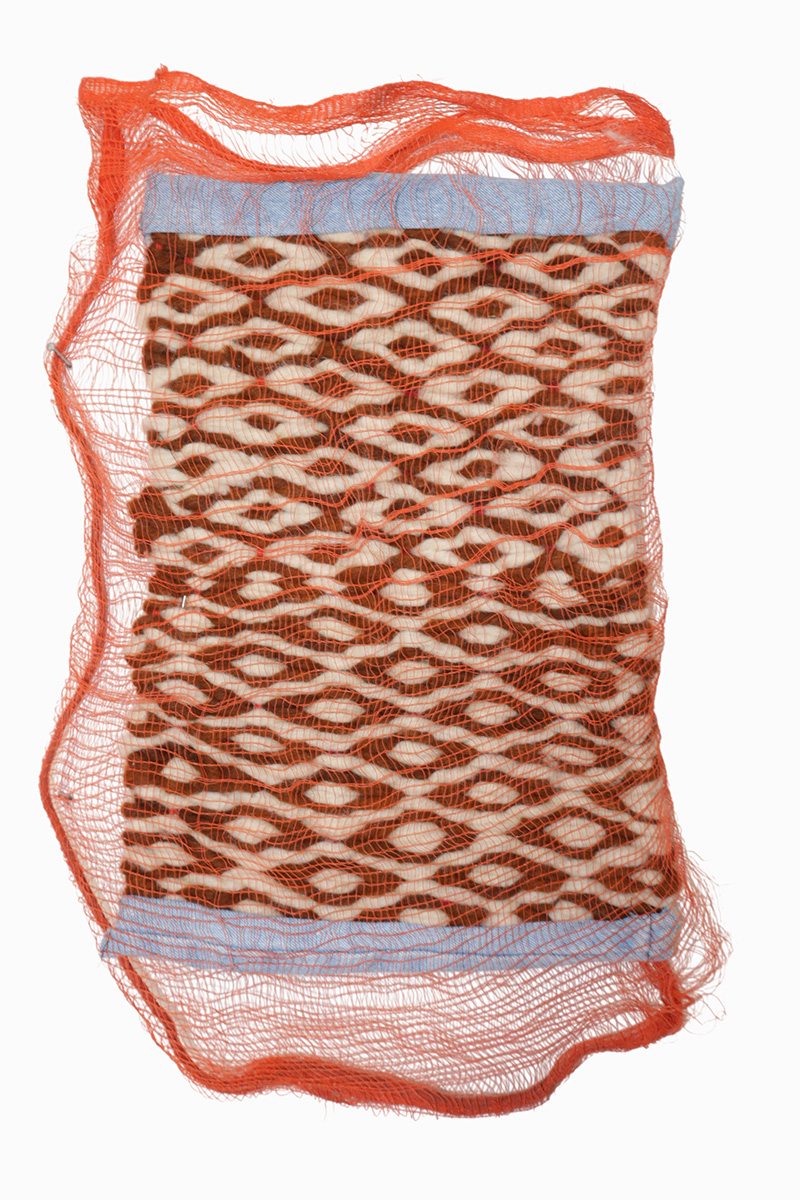
Her research explores the practices and knowledge of the Indigenous community to which she belongs. Her practice focuses on textiles, clay/adobe, and performance.
The materials present in her work include clay and textiles, as well as synthetic and natural fibers (wool, nets, braids). These elements often enable processes of translation. She combines them to create installations, sculptures, and performances. She is particularly interested in ephemeral works that extend through space—either through their installation or through the work itself—seeking to invite the viewer to move through and/or participate in them.
María Torcello
Born in Buenos Aires, Argentina, in 1978.
Autodidact. She attended Jorge Gamarra’s workshop, from 1999 to 2003, to specialize in the direct carving technique on wood. During 1997 she held drawing (living model) and sculpture (technique: modeling and plaster) workshops at Estímulo de Bellas Artes. In 1998 she attended Malena Trosolino’s drawing and sculpture workshop (technique: modeling, plaster and cement) and completed two years of studies at IUNA with 13 approved subjects.
“I work practically with recycled wood. In it you can perceive her history, her life and her death. I find an exciting relationship between the work I do with wood and the work that requires self-knowledge, the search for the absolute being. Through the work of cleaning the trunk, ravaging, finding the form and final polishing, natural beauty emerges as if by magic. “That magic that connects us with primordial nature, with the essence.”
She currently lives and works in Buenos Aires.

Virginia Vitar
Born in Santiago del Estero, Argentina, in 1979.
She lived and trained in Tucumán. Since 2005, she has held solo exhibitions in Argentina and in various cities around the world. Vitar unfolds the ineffable nature of the Tucumán Yungas with her watercolors and materializes its traces in her ceramics. Her artistic practice begins with drawing. The line, repeated and superimposed, ceases to be an isolated stroke and becomes a sprout: a force that expands, overflows, and evokes plant forms.

Roberto Vivo
Born in Montevideo, Uruguay, 1953
He is a Uruguayan artist, businessman and writer. His paintings draw on symbolism: textured fields of color and light give way to organic forms, with deep oranges and blues that gather like clusters of cells, at times drawn inward, at others flowing outward. For Vivo, color is a means of transformation, a way of speaking about metamorphosis, the passing of life and our mystical belonging in the universe. An interdisciplinary artist, he also works in sculpture at small, medium and large scale, with pieces in private and public collections and in museums such as MACA in Punta del Este. He takes part in international fairs and develops site-specific projects for public and private spaces.
Active in business and public life, he is CEO and Chairman of a global media company and First Vice President of the Board of Universidad Torcuato Di Tella. He is the author of books including Short History of the World’s Religions (2012) and War, A Crime Against Humanity. He lives between Punta del Este, Argentina and the United States.