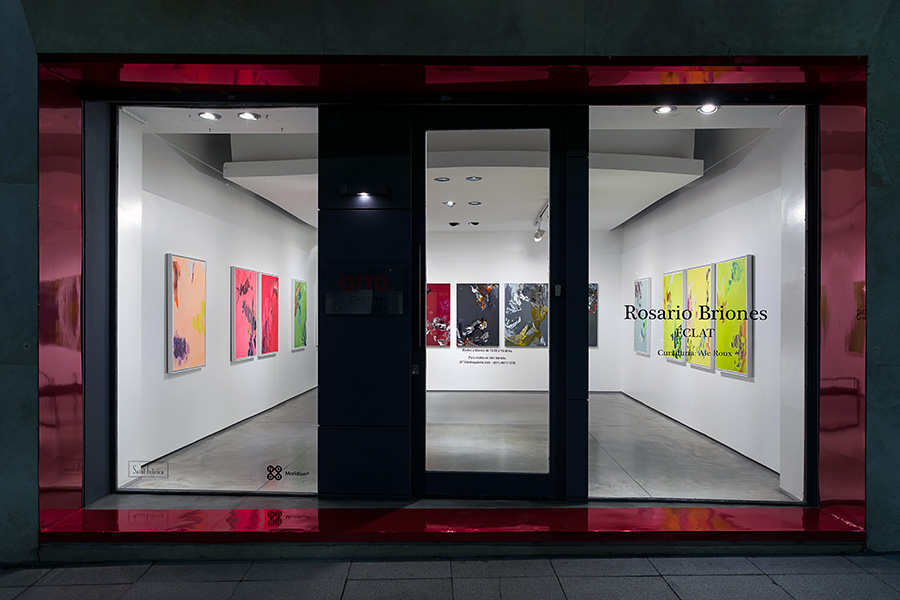

Rosario Briones
ÉCLAT
October 1 to November 10, 2026
Curated by Ale Roux
Curatorial Text
ÉCLAT
On the day we met to begin thinking through Rosario Briones’ exhibition, Eugenio Ottolenghi explained to me the guiding principles of his space: contemporary artists whose practice has a root, a link to the tradition of art.
In an ahistorical age, this struck me as a choice charged with meaning.
At the same time, I understood where the conceptual decision to organize Briones’ first solo show at OTTO Galería came from; because if I had to define the “visual family” to which her painting belongs, I would say it is that of early European Expressionism, where color broke free from representation to become a vehicle for the expression of subjectivity itself; and of its later drift to the other side of the ocean, Abstract Expressionism, where all forms of representation were renounced in order to make painting a ritual, a channel, where what lies beneath consciousness might emerge with the full power of its abstract language.
Rosario Briones’ painting draws on this tradition, but at the same time blends with other languages foreign and opposed to it, situating the images within the flavor of the contemporary, that which cannot settle into a single truth.
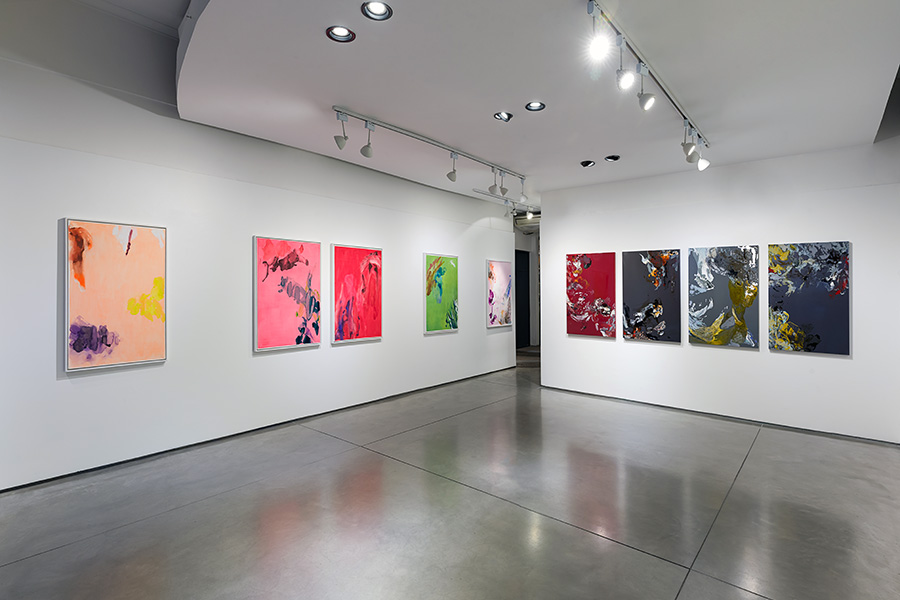
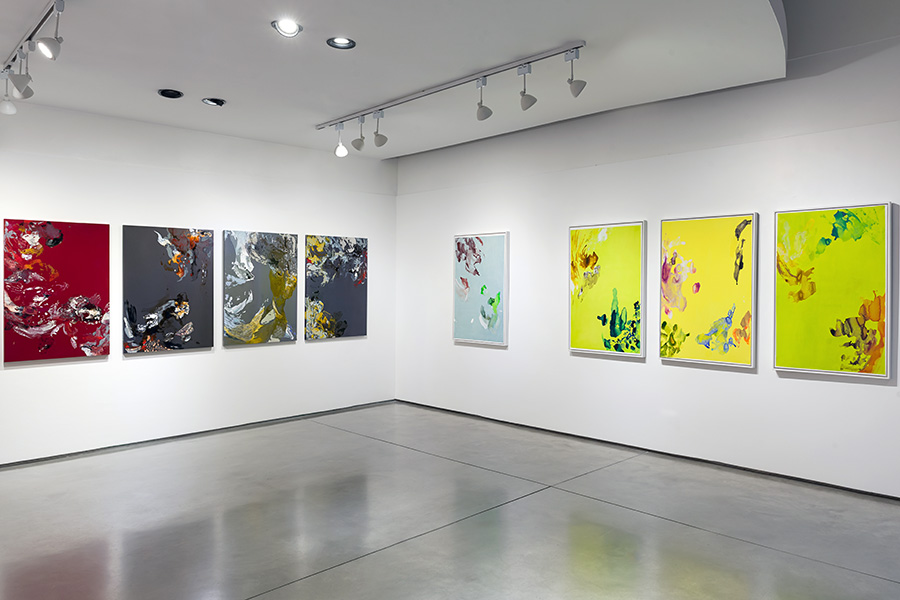
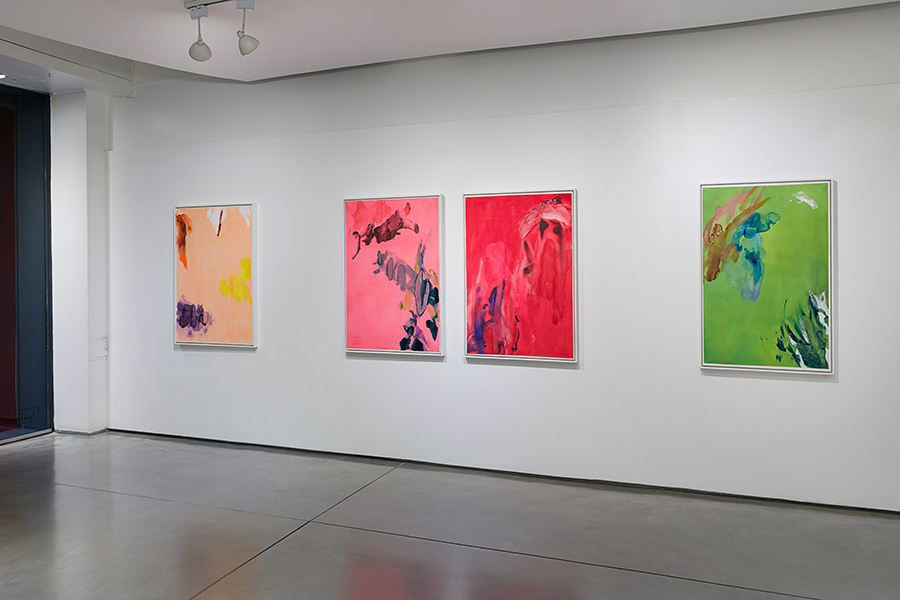
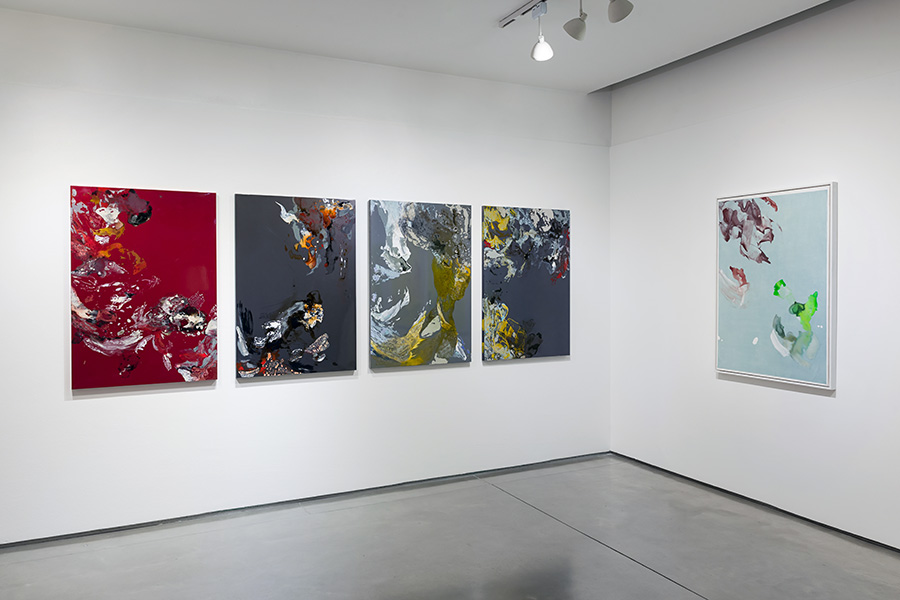
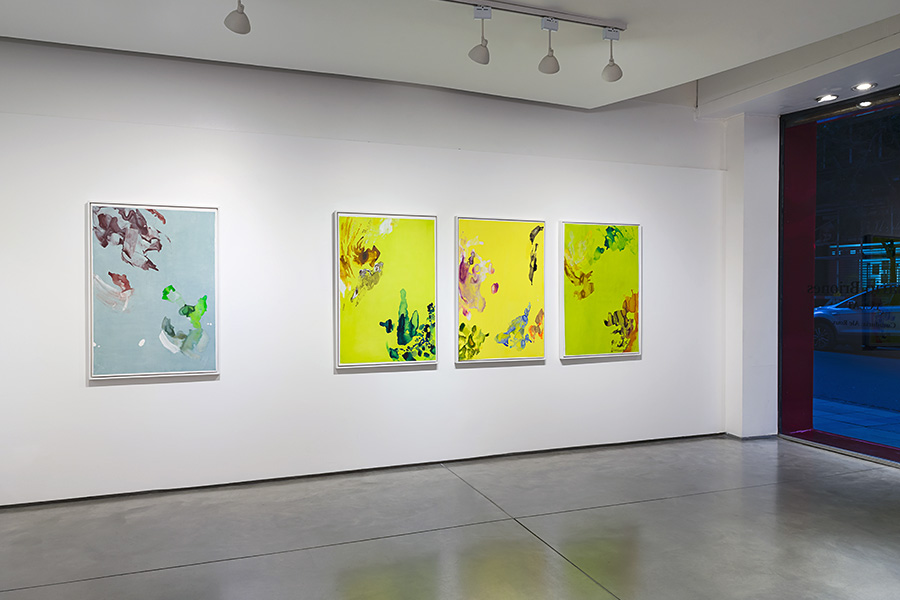
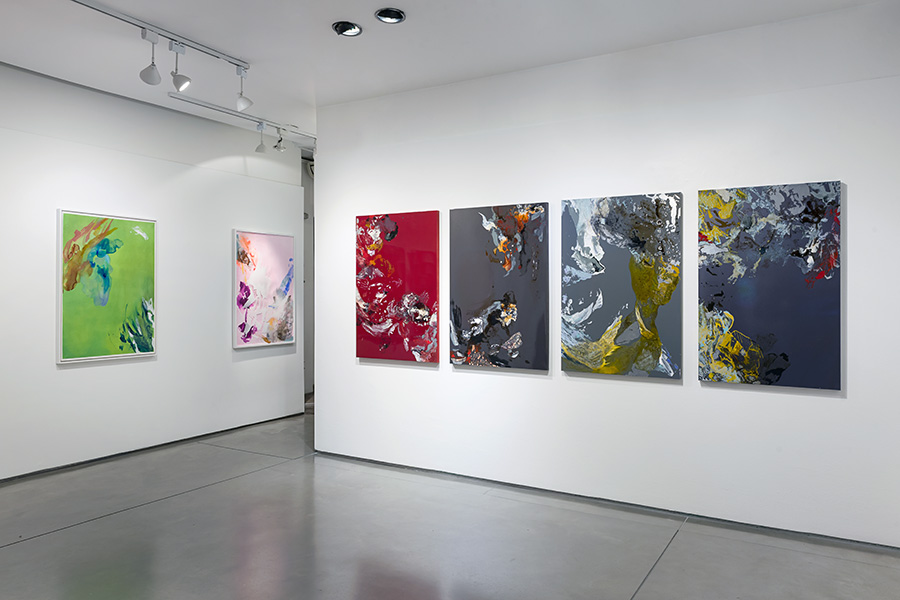
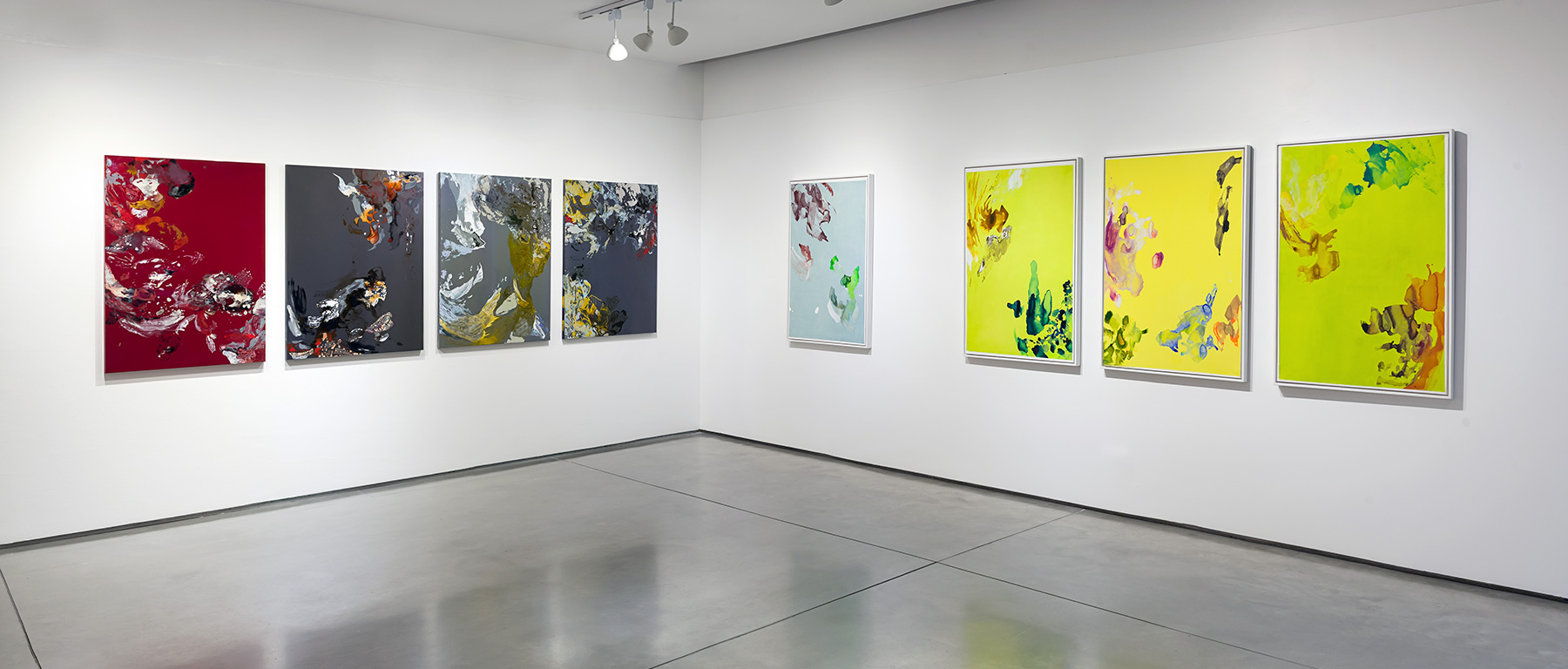
The absence of representation is redoubled, so to speak, since in her paintings the gestures are pushed toward the margins, leaving a void at the center of the image, as if “the represented” were outside the frame and permanently hidden. It is a diaphanous, fresh, luminous painting, nothing heavy; this quality rests on the fluid materiality of gesture: at times the pigment and water act on their own, settling with greater or lesser intensity into the ripples formed on the wet paper, and at other times the expressive, bodily gesture appears (dominant in the works on sheet metal), thus creating a dialogue between chance and intention; a contemporary remake of the two extremes of the range of possibilities that was Abstract Expressionism: Pollock’s “dripping,” with its bodily presence, and Helen Frankenthaler’s “soak-stain,” in which the artist, the maker, lets the paint stain the canvas and disappears.
There is also, in these paintings, something of the scent of “Design” in their elegant relationship with space and their precise finish, and in the introduction of materials tied to industrial design such as acrylic, sheet metal, and car paint — the latter charged with emotional resonance, since her family history is closely bound to the world of automobiles.
Rosario titled this show “Éclat”, both for the meaning of the term (flash, glow, intense brilliance, radiance) and, above all, for its sound — ultimately, for its abstract quality.
In the world of contemporary art, where conceptual constructions built around images end up taking center stage, displacing and even at times obscuring them, it is a pleasure to stand before a body of work that allows us to speak of painting once again.
Ale Roux
Buenos Aires, October 2026